Save More on HVAC Service Today
Adding coolant without proper certification
Refrigerant is one of those things that seems straightforward until you actually work with it. Homeowners see a YouTube video about topping off refrigerant and figure it’s a quick weekend fix. The reality is that handling refrigerant without EPA certification is illegal, and even small mistakes can destroy your compressor and rack up repair bills in the thousands.
Here’s what typically happens: a homeowner notices their AC isn’t cooling as well during a brutal Columbia summer. They grab a can of refrigerant from the hardware store and add it themselves. But refrigerant doesn’t just evaporate on its own. If your system is low, there’s a leak somewhere. Adding refrigerant without fixing the leak means you’re just masking the problem temporarily, and you’re likely overcharging or undercharging the system in the process. An overcharged system puts massive strain on the compressor, while an undercharged one forces the unit to run constantly, wearing out components and driving up your electric bill.
In the Lake Murray area, where AC units run hard from May through September, compressor failure from improper refrigerant handling is one of the most expensive service calls we see. The compressor is the heart of your system, and replacing it can cost as much as installing a new unit. Even worse, DIY refrigerant work voids your manufacturer warranty instantly, leaving you on the hook for the full replacement cost.
Refrigerant leaks don’t announce themselves with obvious signs. You might notice ice forming on the outdoor unit’s copper lines, or the system running nonstop without dropping the indoor temperature below 78 degrees. Some homeowners hear a hissing sound near the condenser. By the time these symptoms show up, the leak has often been present for weeks or months, and your compressor has been working overtime to compensate. That extra stress shortens the lifespan of the entire system.
The refrigerant itself is under high pressure and requires specialized equipment to handle safely. Gauges need to be calibrated. Connections must be vacuum-tested. The system has to be checked for moisture contamination before any refrigerant goes in. Skipping any of these steps leads to poor cooling performance, frozen coils, and eventually a dead compressor. We’ve responded to emergency calls in Chapin and Lexington where a homeowner added refrigerant on Saturday afternoon, and by Sunday evening the compressor had seized completely.
South Carolina summers are unforgiving. When your AC stops working in July, it’s not just uncomfortable, it’s a health risk for kids, elderly family members, and pets. A properly charged system with no leaks will keep your home cool without spiking your power bill. An overcharged or leaking system will fail when you need it most, often on the hottest day of the year.
Our HVAC service technicians use calibrated gauges, follow strict EPA protocols, and always find and repair the leak before adding refrigerant. That’s the difference between a repair that lasts and one that fails again in two weeks. We also document the refrigerant charge and provide a detailed report so you know exactly what was done and why. If your AC isn’t cooling properly, skip the hardware store and call us for an honest diagnostic. We’ll identify the real issue and fix it right the first time, protecting both your system and your investment.
Working on live circuits without training
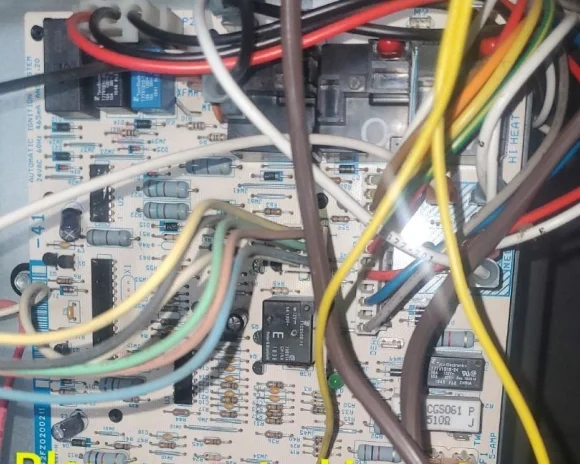
HVAC systems run on high-voltage electricity, and even a small wiring mistake can cause serious injury, fire, or permanent equipment damage. We’ve responded to service calls in Irmo and Lexington where homeowners tried to replace a capacitor or a contactor on their own, only to trip breakers repeatedly, burn out circuit boards, or worse, experience an electrical shock.
The mistake usually starts innocently. A breaker trips, the AC stops working, and the homeowner resets it. When it trips again, they open up the condenser panel and start poking around without shutting off power at the breaker or the disconnect box. One wrong move and you’re looking at a direct short, an arc flash, or a house fire. Even if you manage to avoid injury, incorrect wiring can send the wrong voltage to sensitive components like the blower motor or the control board, frying them instantly.
Homeowners often don’t realize that HVAC electrical components are precisely matched to your system’s voltage and amperage. Swapping a capacitor without confirming the microfarad rating, or replacing a contactor without checking the coil voltage, can cause the new part to fail immediately or damage other parts of the system. And because these repairs involve electrical work, they’re almost always excluded from DIY warranty coverage.
Here in Chapin, summer storms and power surges put additional stress on HVAC electrical systems. If your unit isn’t starting, is tripping breakers, or is making unusual buzzing sounds, don’t guess. Our licensed technicians carry the right tools, follow safety protocols, and test every electrical connection to ensure your system is safe and code-compliant. Protecting your family and your home is worth a professional service call.
Installing generic hardware-store components
Walk into any big-box hardware store and you’ll find aisles of ‘universal’ HVAC parts: thermostats, capacitors, filters, even blower motors. The packaging makes it sound simple, but using the wrong part, even if it physically fits, can reduce efficiency, shorten your system’s lifespan, and void your warranty in one shot.
Here’s a common scenario we see in the Greater Columbia area: a homeowner’s capacitor fails on a Saturday afternoon in July. The AC won’t start, and they need cooling fast. They run to the store, grab a capacitor that looks similar, and install it. The unit starts, and they think they’ve saved a few hundred dollars. But three weeks later, the compressor is running hot, the system is short-cycling, and their electric bill has spiked. Why? Because the replacement capacitor had the wrong microfarad rating or tolerance. It worked, but it forced the compressor to work harder, and now the compressor is on its way to failure.
The same issue happens with universal thermostats, aftermarket blower motors, and generic air filters. HVAC systems are engineered as integrated units. When you swap in a part that isn’t designed for your specific model and tonnage, you change the airflow, the run time, the voltage draw, or the refrigerant cycle. Those changes add up fast, especially in our humid Midlands climate where systems already work overtime to remove moisture from the air.
Manufacturers know this, which is why most warranties require original equipment manufacturer (OEM) parts installed by a licensed technician. A $30 universal part might save you money today, but it can cost you thousands when it voids your warranty and damages your system. Our team sources the correct OEM parts for every repair and stands behind the work with real warranties. If you’re not sure whether a part is compatible, give us a call. We’d rather help you avoid a costly mistake than repair the damage later.
Treating symptoms instead of finding the real problem
This is the mistake that turns a simple fix into a cycle of repeated failures and mounting frustration. A homeowner notices a symptom, replaces the most obvious part, and when the problem comes back a week later, they replace another part. Before long, they’ve spent more on trial-and-error repairs than a professional diagnostic would have cost, and the system still isn’t working right.
We see this all the time in our service area. A system isn’t cooling, so the homeowner replaces the thermostat. When that doesn’t fix it, they replace the air filter. Then the capacitor. Then they add refrigerant. Each fix costs money and time, but none of them address the real problem, which might be a clogged evaporator coil, a failing blower motor, or a refrigerant leak. By the time they call us, they’ve already voided the warranty, damaged other components, and spent several hundred dollars.
HVAC systems are complex. A single symptom like weak airflow can be caused by a dozen different issues: a dirty coil, undersized ductwork, a bad blower motor, low refrigerant, a stuck damper, or even a failing compressor. Diagnosing the root cause requires specialized tools like manifold gauges, airflow meters, and amp clamps, plus the experience to interpret the readings in context. That’s not something you can replicate with a Google search.
In South Carolina’s high-humidity environment, problems like mold growth on coils, condensate drain clogs, and duct leaks are especially common and often interconnected. What looks like a cooling problem might actually be an airflow or drainage issue that’s stressing the entire system. Our HVAC maintenance approach starts with a full system diagnostic to identify the real problem, not just the symptom. We’ll walk you through what we found, explain your options, and give you an honest estimate before we do any work. That’s how you avoid throwing money at the wrong repairs.
Finishing the job without verifying performance
Even if you manage to install the right part correctly, your job isn’t done. HVAC systems need to be tested and calibrated after every repair to ensure proper airflow, correct refrigerant charge, accurate thermostat operation, and balanced duct pressures. Skipping this step is like changing your car’s oil and never checking the level afterward. The repair might hold for a while, but you’re setting yourself up for premature wear and unexpected failures.
Here’s what happens when you skip testing: you replace a blower motor, the system starts up, and you call it good. But without measuring the airflow at the registers, you don’t know if the new motor is delivering the right cubic feet per minute (CFM) for your ductwork and tonnage. If the airflow is too high, it can freeze your evaporator coil. If it’s too low, your home won’t cool evenly, and the compressor will run longer than it should. Either way, you’re reducing efficiency and shortening the system’s lifespan.
The same applies to thermostat calibration. If your thermostat is reading two degrees off, your system will short-cycle or run continuously, wasting energy and stressing components. In the Chapin and Lake Murray areas, where summer cooling bills can easily top $200 a month, even a small calibration error can cost you hundreds in wasted electricity over a season.
Our technicians always test system performance after every repair. We measure supply and return air temperatures, check refrigerant pressures, verify airflow at multiple points, and calibrate thermostats to within one degree. We also inspect for secondary issues like duct leaks or dirty coils that could affect the repair’s longevity. That’s the level of detail that prevents callbacks and keeps your system running efficiently for years. If you’re facing an HVAC issue and want an honest diagnosis, contact ATD Services for a free estimate. We’ll help you avoid costly mistakes and keep your system running reliably all season long.